Creating and selling art for living rooms
 Save
Living room art holds a special place in both your practice and your buyers' lives. These are the pieces people live with daily, the work that anchors a room and shapes how a space feels. For independent artists, understanding what makes art work in a living room—and how to present your own work with that context in mind—opens up one of the most consistent markets for original and affordable pieces. This guide walks you through Eclectic Art Studio principles for creating, photographing and positioning work that buyers can picture on their walls.
Understanding what living room buyers look for
People choosing art for a living room want something they can return to without tiring of it. That means work with enough depth to reward repeated viewing, but without visual aggression that demands constant attention. Scale matters more here than in any other room: a piece that feels bold in your studio may disappear on a large wall, while an intimate work can feel lost above a sofa.
Consider how your palette and subject matter sit within a domestic setting. Warm neutrals, muted jewel tones and work with clear focal points tend to sell reliably, though this should guide rather than limit you. Your buyer is often balancing your piece with existing furniture, natural light at different times of day and the need for the room to serve multiple functions.
Common living room dimensions and what they mean for your work
Most living room walls can accommodate work between sixty and one hundred and twenty centimetres wide. Vertical pieces suit narrow walls flanking windows or doorways; horizontal work anchors the space above seating. If you work small, consider how pieces might be grouped: a set of three or four related works, each under forty centimetres, gives a buyer flexibility and can command a stronger combined price than a single large canvas.
Mistakes that lose you living room sales
Photographing your work in poor light or against a cluttered background makes it nearly impossible for a buyer to imagine the piece in their home. Take the time to shoot in even, natural light with a plain wall behind. Include a reference object or state dimensions clearly in every listing—buyers will not guess, and they will not ask.
Pricing without considering framing costs is another common misstep. If your work needs a frame to be wall-ready, either include it in the price or state clearly what the buyer will need to source. Unframed work on paper is harder to sell unless you're working at a price point where your buyer expects to frame everything themselves.
Avoid vague titles and absent descriptions. "Untitled three" tells a potential buyer nothing; "Morning light through kitchen windows, watercolour on cold-press paper" gives them a foothold. Write two or three sentences about what you were working through, the materials you used and the finished size. That small effort separates you from artists who assume the work speaks entirely for itself.
Where to connect with living room collectors
Local open studios and affordable art fairs put your work in front of people actively furnishing their homes. These buyers are often more decisive than gallery visitors: they know their wall space, they have a budget and they are ready to buy if something fits. Bring postcards or a portfolio of similar work so a buyer interested in one piece can see what else you have.
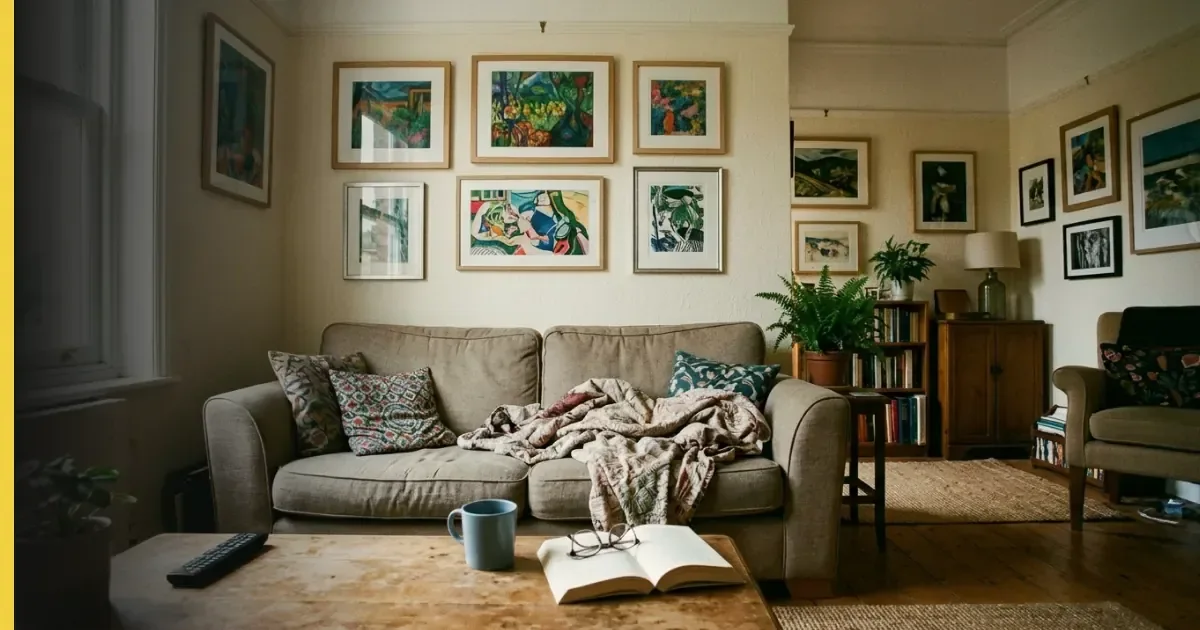
Online, platforms that let you upload room-view mockups or scale previews convert far better than plain product shots. Many independent artists underestimate how much a single well-composed lifestyle image—your work staged on a wall with a sofa and a plant in frame—can shift a browser into a buyer. You do not need a professional set: a friend's front room and decent afternoon light will do the job.
Interior designers and stylists are another route worth your time. Send a short, focused email with three to five images of work suited to residential spaces, your price range and a line about commissions if you take them. Keep it brief and make it easy to say yes.
Building relationships with repeat buyers
Someone who buys one piece for their living room will often return for another room, or recommend you when a friend redecorates. Follow up a month after delivery with a quick note asking how the piece has settled in. Offer first refusal on new work in a similar vein before it goes public. Treat every sale as the start of a longer conversation, not a closed transaction.
Presenting your work for living room contexts
When you share work online or in printed materials, show it in situ whenever you can. A single photograph of your piece hung at the right height, with a bit of floor and furniture visible, does more than a dozen studio shots. It gives the buyer permission to picture the work in their own space and lowers the psychological barrier to purchase.
Write your dimensions consistently—height before width, in centimetres—and include depth for canvas or board. State whether the work is framed, mounted or unmounted. If edges are finished and the piece can hang without a frame, say so. These small clarifications remove friction at the point of sale.
- Photograph every finished piece in even, natural light with a plain background, and take a second shot staged on a wall if you can.
- Write the title, dimensions, medium and a two-sentence description before you list or share the work.
- Keep a separate folder of living-room-scale pieces so you can respond quickly when a buyer asks what you have available in that range.
- Price your work to include any essential framing or make it very clear what the buyer will need to source themselves.
Practical choices that make your work easier to live with
Lighter frames and hanging systems that do not require drilling appeal to renters and people who rearrange frequently. If you work on paper, offering a mount and backing board as standard shows you understand how the piece will be used. For canvas, finishing the edges so the work can hang unframed saves your buyer money and suits modern interiors.
Think about longevity. Work that fades in sunlight or needs careful handling will not suit a busy family living room. Use lightfast materials, seal anything vulnerable and include a care note with each sale. A buyer who feels confident your work will last is a buyer more likely to invest in a larger piece next time.
Building a body of work buyers can return to
Collectors furnishing a home often want pieces that relate to one another without being identical. If you work in series, let people know: a buyer who loves one piece may commission or purchase a second to flank a fireplace or balance a room. Consistent sizing within a series makes this easier and shows you are thinking about how your work functions beyond the studio wall.
Keep a running list of past buyers and what they purchased. When you finish something that would sit well alongside an earlier piece, reach out directly. People appreciate being remembered, and a targeted approach converts far better than a general newsletter to everyone on your list.
Frequently asked questions
What size should I make art for living rooms?
Most living room walls suit work between sixty and one hundred and twenty centimetres wide. Horizontal pieces work well above sofas; vertical pieces fit narrow walls. If you work smaller, consider creating sets of three or four related pieces that buyers can group together.
How do I photograph my work so buyers can picture it at home?
Shoot in even, natural light against a plain wall, and include dimensions in every listing. A second photograph showing the piece hung on a wall with a bit of furniture visible helps buyers imagine it in their own space and significantly improves online conversions.
What information should I include when listing living room art?
State the title, dimensions in centimetres with height first, the medium and whether the work is framed or needs framing. Add two or three sentences about the piece and include a care note if the work has any specific requirements.
How can I connect with people buying art for their homes?
Local open studios and affordable art fairs attract buyers actively furnishing their homes. Online, use room-view mockups or staged photographs. Interior designers and stylists are also worth approaching with a short email showing three to five suitable pieces and your price range.
Should I offer my living room pieces framed or unframed?
Either works, but be very clear what the buyer receives. If your work needs framing to be wall-ready, include the frame in your price or state exactly what is required. For canvas, finishing edges so the piece can hang without a frame appeals to buyers on a budget.
How do I price work for living room buyers without undervaluing it?
Factor in materials, time and any framing or finishing the buyer needs. Research comparable work by independent artists at your career stage. Living room buyers often have clear budgets, so transparent pricing and a range of sizes at different price points will serve you better than a single high-ticket piece.
What mistakes do independent artists make when selling living room art?
Poor photographs with cluttered backgrounds, missing dimensions, vague titles and unclear framing details all lose sales. Pricing without considering what the buyer needs to make the work wall-ready is another common error. Small clarifications remove friction and make it easier for people to buy.