Working with duck egg in your practice
 Save
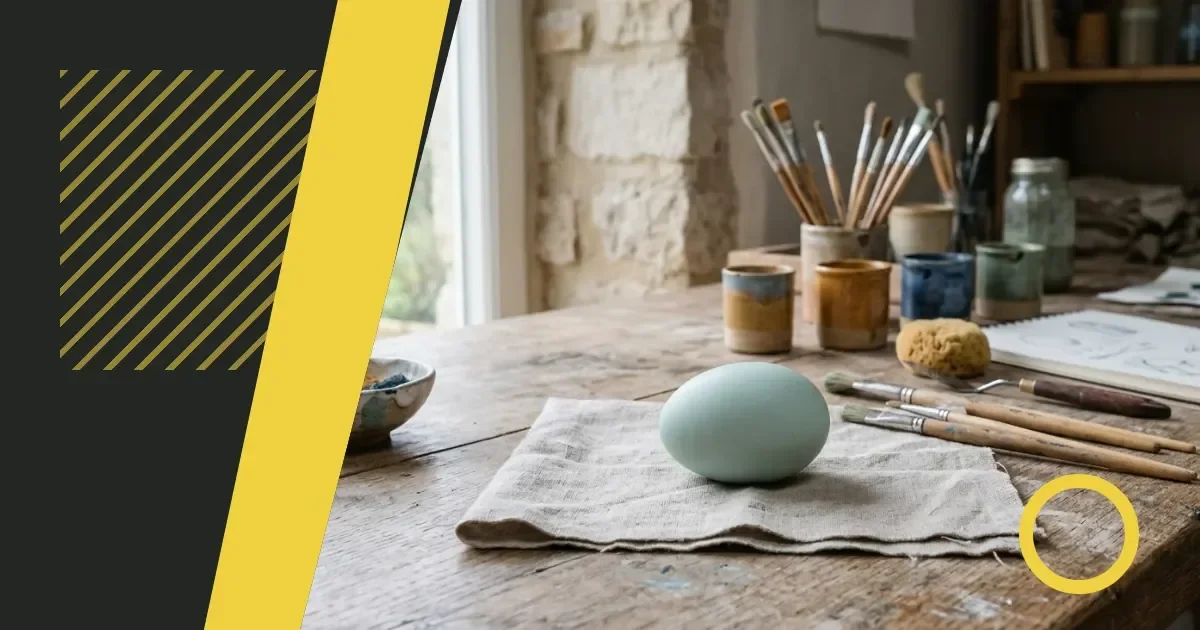
Duck egg offers independent artists a distinctive natural material with properties that set it apart from chicken egg. Eclectic Art Studio explores how you can use it in tempera painting, gilding and decorative work, and what makes it worth seeking out for certain techniques.
Recognise a duck egg by its characteristics
Duck eggs are larger than chicken eggs, with shells that tend towards pale blue, grey-green or white depending on the breed. The shell is thicker and slightly waxy to the touch. When you crack one open, the albumen appears more translucent and the yolk sits higher and rounder, with a richer orange tone.
The yolk contains more fat and protein than chicken yolk, which matters when you use it as a binding medium. That extra fat gives tempera made with duck egg a smoother working consistency and slightly longer open time before it sets.
Use it for egg tempera painting
Traditional egg tempera calls for fresh yolk separated cleanly from the white. Duck yolk's higher fat content produces a medium that flows more readily from the brush and takes pigment with less resistance. You will notice it stays workable for a few seconds longer than chicken-yolk tempera, though it still dries fast compared to oil.
Mix your pigment with roughly equal parts yolk and distilled water. The membrane of a duck yolk is tougher, so pierce it over a clean jar and let the yolk run through your fingers to leave the sac behind. One yolk binds enough pigment for several hours of work; prepare only what you need that day.
Apply it in gilding and decorative work
Glair — whisked egg white left to settle and separate — serves as an adhesive for gold leaf and for glazing pigments onto parchment or panel. Duck-egg white produces a glair with slightly more body than chicken white, which some gilders prefer for attaching leaf to vertical surfaces where a thinner glair might run.
Whisk the white to stiff peaks, leave it covered overnight in a cool place, then draw off the clear liquid that pools at the bottom. The remaining layer is your glair. Dilute it with a little water before use. It keeps for several days under refrigeration but loses adhesive strength as it ages.
Source and store them properly
Farm shops, farmers' markets and smallholders who keep ducks often sell their eggs directly. You may also find them in independent food shops and some supermarkets, though availability varies by season and region. Expect to pay more than for chicken eggs.
Store duck eggs in the fridge with the pointed end down. They stay fresh for around three weeks, but for paint mediums use them within a few days of laying when the yolk membrane is strongest. Older eggs are harder to separate cleanly. If you are unsure of an egg's age, place it in a bowl of water: a fresh egg sinks and lies flat; a stale one floats.
Understand what changes in your materials
Switching from chicken to duck egg alters the working properties of your medium in small but noticeable ways. Duck-yolk tempera has a creamier texture and slightly longer drying time, which some painters find easier to blend. The extra fat can also make the dried paint film marginally more flexible, though the difference is subtle.
The higher protein content in duck egg white means glair sets more firmly once dry. This can be an advantage when you need a strong bond for metal leaf, but it also means you have less time to reposition the leaf after laying it down. Test your glair on a scrap surface before committing it to finished work.
Weigh the practical trade-offs
Duck eggs cost more and require deliberate sourcing, so consider whether the material genuinely improves your process or whether habit and availability make chicken egg the sensible choice. For small studies and daily practice, chicken egg performs reliably. For finished work where a creamier medium or stronger glair makes a difference you can see, duck egg justifies the effort.
Some artists keep a few duck eggs on hand for particular jobs — detailed tempera work that benefits from the extra open time, or gilding projects that need a robust adhesive — and use chicken egg for everything else. There is no need to switch entirely; match the material to the task.
Keep your workspace and materials clean
Egg-based mediums spoil quickly in warm conditions and attract mould if left exposed. Wash your brushes, palettes and jars with cool water immediately after use; warm water will cook the egg onto your tools. Prepare only the amount of medium you need for one session, and discard any leftover mixture at the end of the day.
If you are working with raw egg for several hours, wash your hands before touching anything else in your studio. The same hygiene practices that apply in the kitchen apply here: egg is a perishable food product, and treating it as such keeps your workspace safe and your materials fresh.
Frequently asked questions
How does duck egg differ from chicken egg in tempera painting?
Duck yolk contains more fat and protein, giving tempera a smoother consistency and slightly longer working time before it dries. The higher fat content also makes the dried paint film marginally more flexible.
What is glair and how do you make it from duck egg white?
Glair is whisked egg white left to settle overnight, then separated into a clear adhesive liquid used in gilding and glazing. Whisk the white to stiff peaks, let it rest covered in a cool place, then draw off the liquid that pools at the bottom and dilute it slightly before use.
Where can independent artists buy duck eggs for painting materials?
Farm shops, farmers' markets and smallholders who keep ducks often sell eggs directly. Some independent food shops and supermarkets stock them, though availability varies by season and location.