Working with Blue Prussian Smooth Metallic Paste
 Save
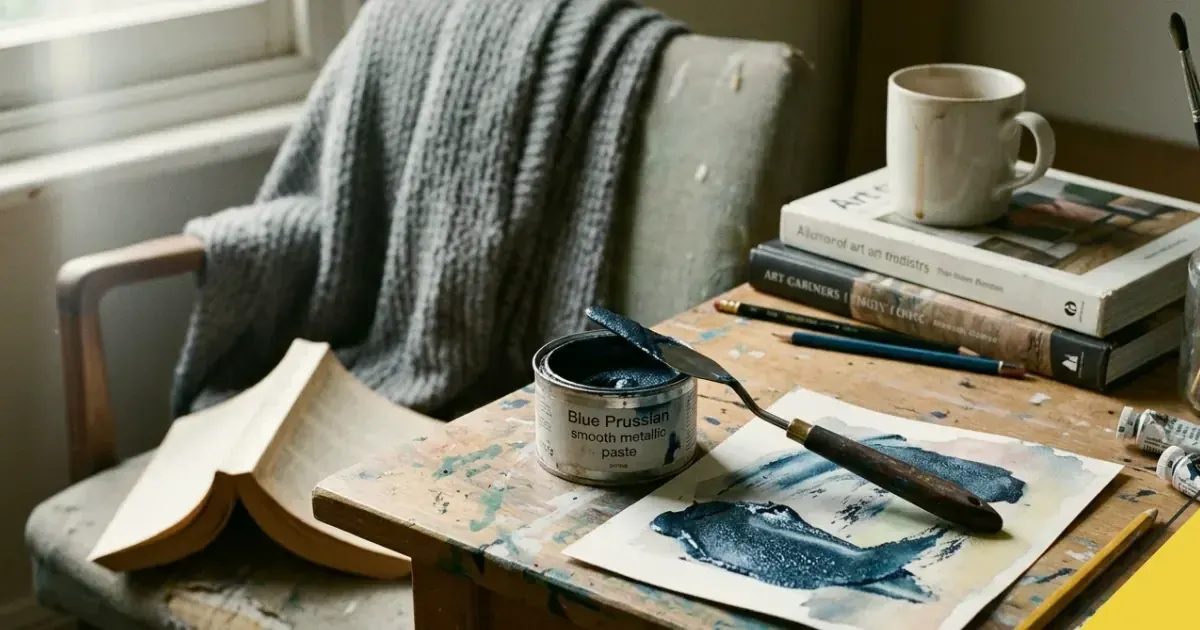
Blue prussian smooth metallic paste brings a deep, luminous quality to surfaces that flat pigment cannot match. It works across mixed media, collage and dimensional painting, giving you control over sheen and texture. Eclectic Art Studio walks you through how this material behaves, where it works best and how to combine it with other elements in your practice.
Understanding what smooth metallic paste offers
Smooth metallic paste sits between heavy body paint and sculpting medium. The blue prussian variant holds a rich, cool tone with a soft metallic finish that catches light without glare. You apply it with a palette knife or stiff brush, building layers or spreading it thin for translucent effects.
The paste dries to a slightly raised surface. On rigid supports it stays workable for fifteen to twenty minutes before setting. Once dry, it accepts further layers of acrylic, ink or varnish without lifting.
Choosing surfaces that hold the paste
Wood panels, canvas board and primed heavyweight paper all take smooth metallic paste without buckling. Stretched canvas needs firm tension; thin or loosely stretched fabric sags under the weight. Prime any raw surface first with acrylic gesso to prevent the paste sinking into the grain.
Applying the paste with control
Start with a clean, dry surface. Scoop a small amount onto your palette knife and spread it in one direction to create an even film. For texture, apply thicker and work the knife in short, overlapping strokes.
Thin layers dry faster and show more translucency. Thick applications take several hours to cure fully and hold tool marks well. If the paste stiffens on your palette, mist it lightly with water and blend again.
Mixing paste with other materials
Blue prussian smooth metallic paste blends with acrylic paint to soften its sheen or shift the hue. Add small amounts of paste to your paint rather than the reverse; this keeps the metallic particles suspended. You can also layer it over dried acrylic washes to create depth, or under translucent glazes for a glowing base.
Avoid oil-based mediums on top of the paste. They do not adhere reliably and may bead or crack over time.
Recognising when the approach isn't working
Cracking appears when paste is applied too thickly in one go or when the base surface flexes. If cracks form, sand them lightly once dry and apply a thinner layer to fill. Uneven sheen usually signals incomplete drying; wait another day before sealing.
If the metallic finish looks dull, check your water ratio. Too much moisture disperses the metallic particles and flattens the effect. Use water sparingly, only to extend working time.
Storing and cleaning your tools
Scrape excess paste back into its container immediately after use. Seal the lid tightly to prevent the paste from drying out. Knives and brushes clean easily with warm water and soap while the paste is still wet; once dry, it requires scrubbing or soaking.
Store your container upright in a cool, dry place. Metallic pastes separate slightly over time; stir before each use to redistribute the particles evenly.
Combining paste with other techniques
Blue prussian smooth metallic paste pairs well with stencilling, collage and mark-making. Press textured fabric or crumpled foil into wet paste to leave an impression, or scrape through it with a comb or rib tool for linear patterns. Once dry, you can draw over it with graphite, charcoal or ink without smudging the metallic surface.
For layered work, let each application dry completely before adding the next. This prevents muddying and preserves the clarity of each colour.
Where to go next
Building confidence with new materials takes time and repeated use. What independent artists need to get started covers the core supplies that support experimentation, while overcoming creative block offers practical ways to keep momentum when a technique feels unfamiliar.
Work in small studies before committing to larger pieces. Test the paste on offcuts of your usual surfaces, try different application tools and note how drying times change with room temperature. Each session adds to your understanding of how the material responds.
This is an information site for general guidance only. We do not sell any goods or services.
Frequently asked questions
What surfaces work best with blue prussian smooth metallic paste?
Wood panels, canvas board and primed heavyweight paper hold the paste without buckling. Stretched canvas needs firm tension to prevent sagging under the weight.
How do you prevent cracking when using metallic paste?
Apply paste in thin to medium layers rather than very thick ones, and work on rigid surfaces that do not flex. Let each layer dry completely before adding the next.
What happens if you add too much water to the paste?
Excess water disperses the metallic particles and flattens the finish. Use water sparingly, only to extend working time or keep the paste from stiffening on your palette.