A practical drink and cocktail cabinet for your creative space
 Save
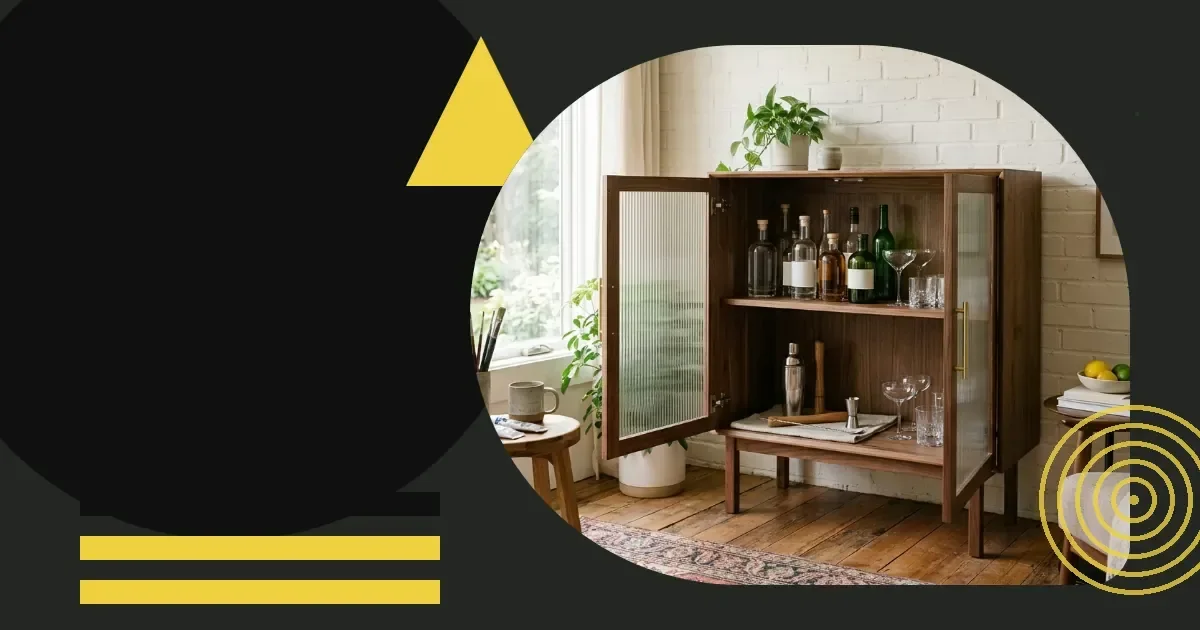
A drink and cocktail cabinet combines storage, display and serving space in one piece of furniture. At Eclectic Art Studio, this guide explains how to choose a cabinet that suits your room, collection and working habits.
Choose the cabinet for the space you have
Begin with the cabinet’s position rather than its appearance. A tall design may suit a dedicated dining room, while a lower unit can work beside a sideboard or against a kitchen wall. Check the route from the door to its final position, including corners, furniture and changes in floor level.
Wall-mounted or counter-top designs can save floor space, but they depend on suitable fixing points and a surface capable of supporting the weight. A freestanding cabinet offers more flexibility if you may move home or change your room arrangement.
Make storage work around your glassware
Consider the shapes and sizes of the bottles, glasses and serving pieces you already own. Adjustable shelves are useful when your collection includes both tall bottles and shorter stemware. Drawers may suit bar tools, while open compartments can display frequently used pieces without making every item visible.
Protect delicate glassware with stable shelves, secure dividers and non-slip mats. Avoid overcrowding a cabinet, as extra pressure can lead to chips or breakage. Leave enough room to lift items out without gripping other pieces stored close by.
Give the drink area a practical layout
Plan the sequence of use so the cabinet supports preparation, serving and clearing away. Frequently used glasses and tools should sit within easy reach, while reserve bottles can be placed deeper inside. Place heavier items on lower shelves and keep anything breakable away from the door edge.
If the cabinet includes a work surface, leave enough clear space for preparing a drink. A surface crowded by glasses and equipment becomes frustrating quickly. An under-cabinet light may also make the contents easier to see, provided the electrical installation is suitable and safely positioned.
A useful cabinet reduces visual clutter while making the objects you use most easier to find.
Check materials and construction in person
Look closely at joints, drawer runners, shelf supports and door hinges. Small, smooth-moving drawers are easier to use than stiff or uneven ones, while a cabinet with rigid construction is less likely to twist as its contents change. Check that every shelf can carry the items you intend to place on it.
The finish should suit the room and the level of care you are willing to provide. A glossy surface may show fingerprints, while a visibly textured finish can disguise minor marks. For timber, consider the grain, joinery and any finish that requires ongoing maintenance.
Match the design to your creative routine
Your cabinet may need to work as hard as you do. Artists, freelancers and entertainers often move objects around, clear surfaces quickly and host informal gatherings. Choose a design that opens easily, resists frequent handling and can be maintained without specialist equipment.
Colour and detailing should support the room rather than compete with it. A dark cabinet can create a defined backdrop for glassware, while a lighter finish may blend into a bright studio or kitchen. Architectural details add character, but doors, drawers and handles should remain easy to use.
Prepare the cabinet before adding your collection
- Clear the intended position and measure the available wall, floor or counter space.
- Check doorways, corners and nearby furniture before moving the cabinet into place.
- Assemble and level the unit in a clear working area before adding glassware or bottles.
- Adjust the shelves, secure loose fittings and confirm that doors and drawers move freely.
- Clean the interior, then place heavier items first and arrange the rest by frequency of use.
Make a short final check
Before the cabinet becomes part of your routine, test the doors, drawers and shelf spacing with the items you use most. Confirm that the unit is stable and that the contents remain visible or accessible as intended. Small adjustments now prevent awkward rearrangement later.
You can then add decorative objects sparingly, leaving the cabinet practical rather than treating it as a display case. A few well-chosen details will still make it feel personal.
Disclaimer: This page provides general information for readers. Eclectic Art Studio does not sell any goods or services.